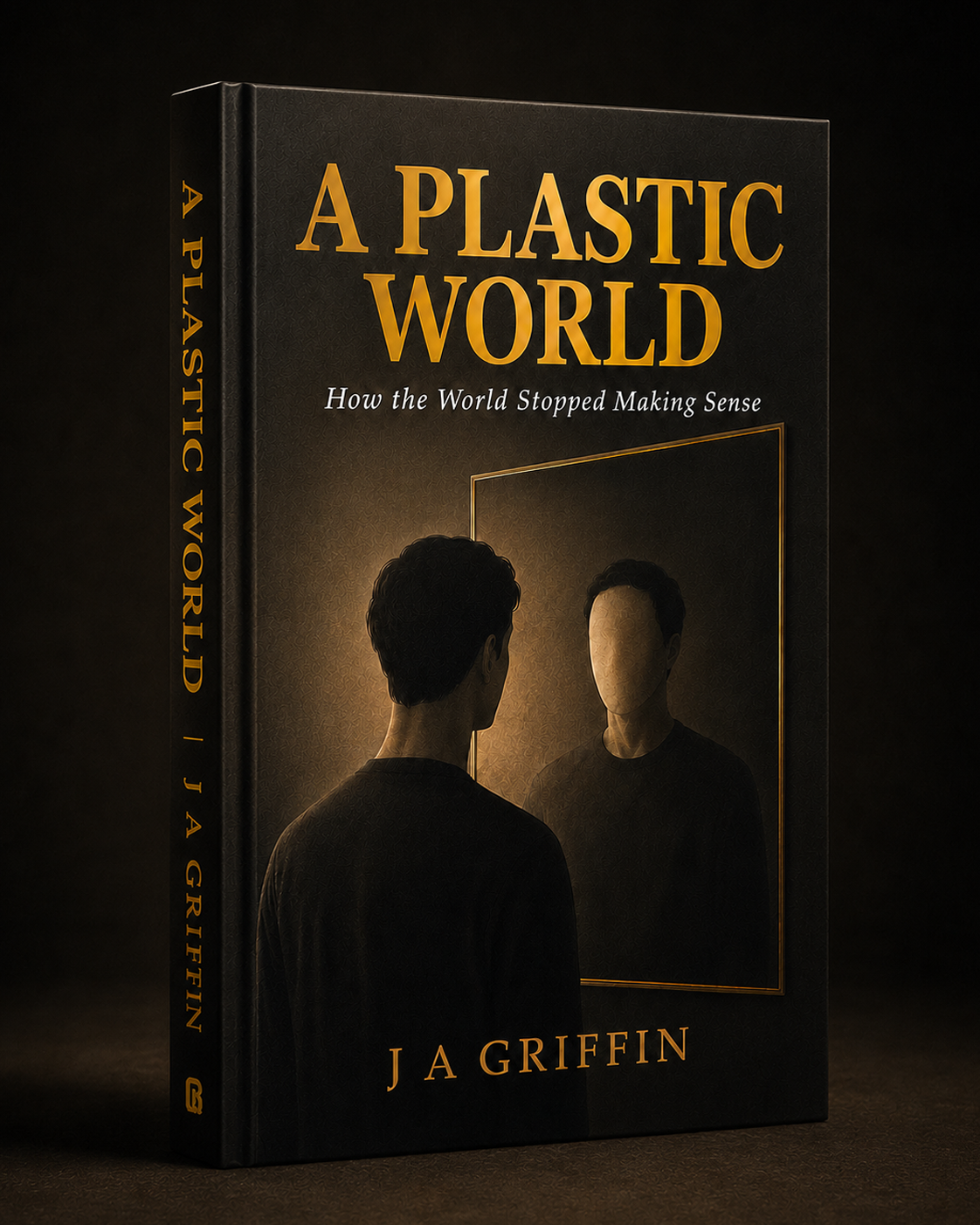

A Plastic World — the trilogy by J A Griffin.
About the Trilogy
Something has gone wrong with the way the West understands itself. Words shift meaning overnight. Institutions invert the values they were built to protect. Ordinary people hesitate before saying what they see. A Plastic World is a three-book reckoning with that disorientation — not a theory assembled in a faculty lounge, but a witness account from someone who has spent decades watching it unfold across America and Europe.
Book One, How the World Stopped Making Sense, is the diagnosis: how managed culture replaced the real thing, and how a civilization came to treat its own inheritance as a crime scene. Book Two, The Paradox of the Leftist Mind, maps the pattern beneath the chaos — why the same ideology keeps contradicting itself across every domain it touches. Book Three, The Fight to Save the West, turns from diagnosis to defense: what is worth keeping, and what it will take to keep it.
Western civilization — ordered liberty, conscience, reason, beauty, the rule of law — is the greatest gift humanity was ever handed. It will not preserve itself. It can only be defended by people who are not embarrassed to inherit it. This is not a catalogue of grievances. It is the map.
The Trilogy
High-resolution files, free to use. Click to download.
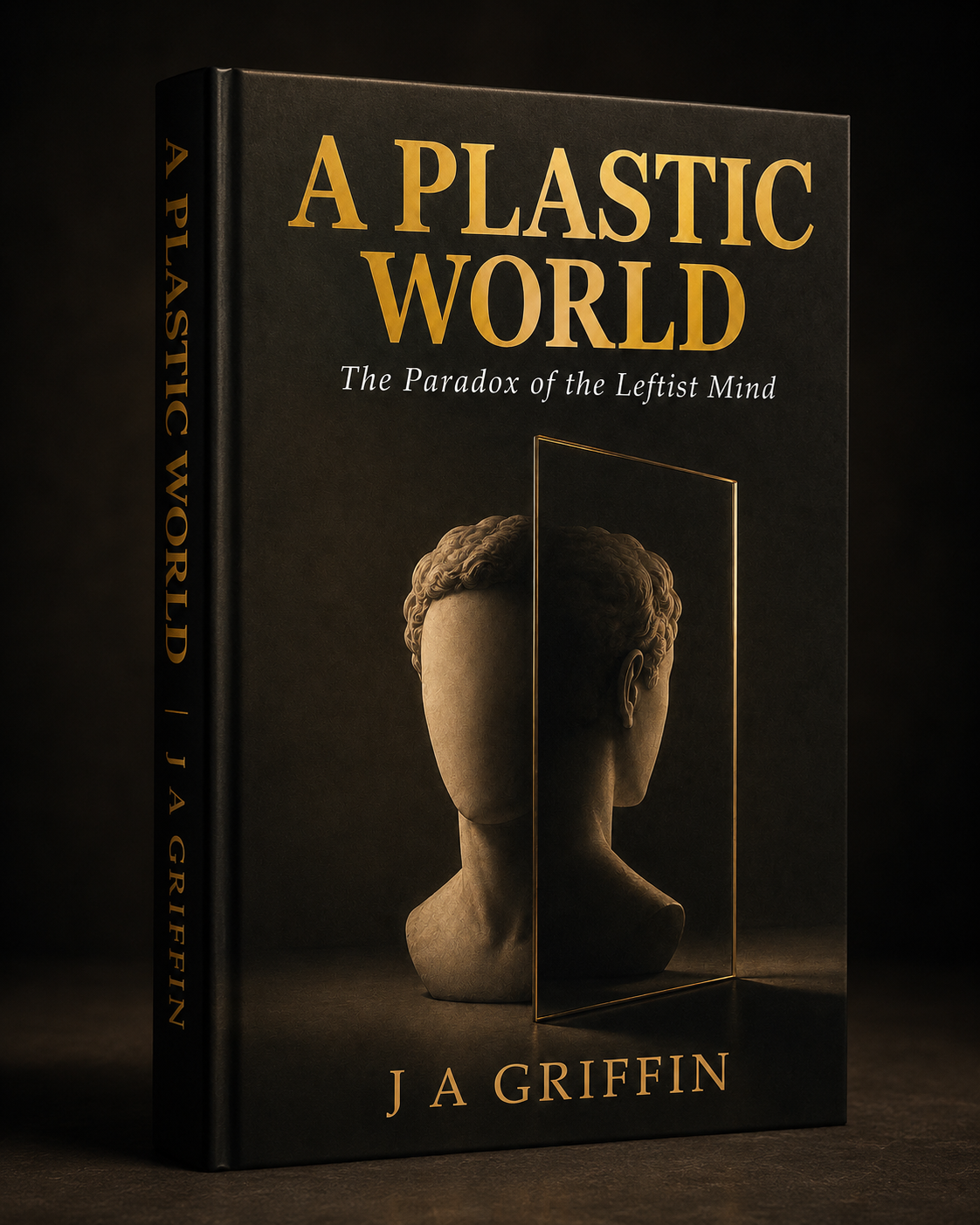
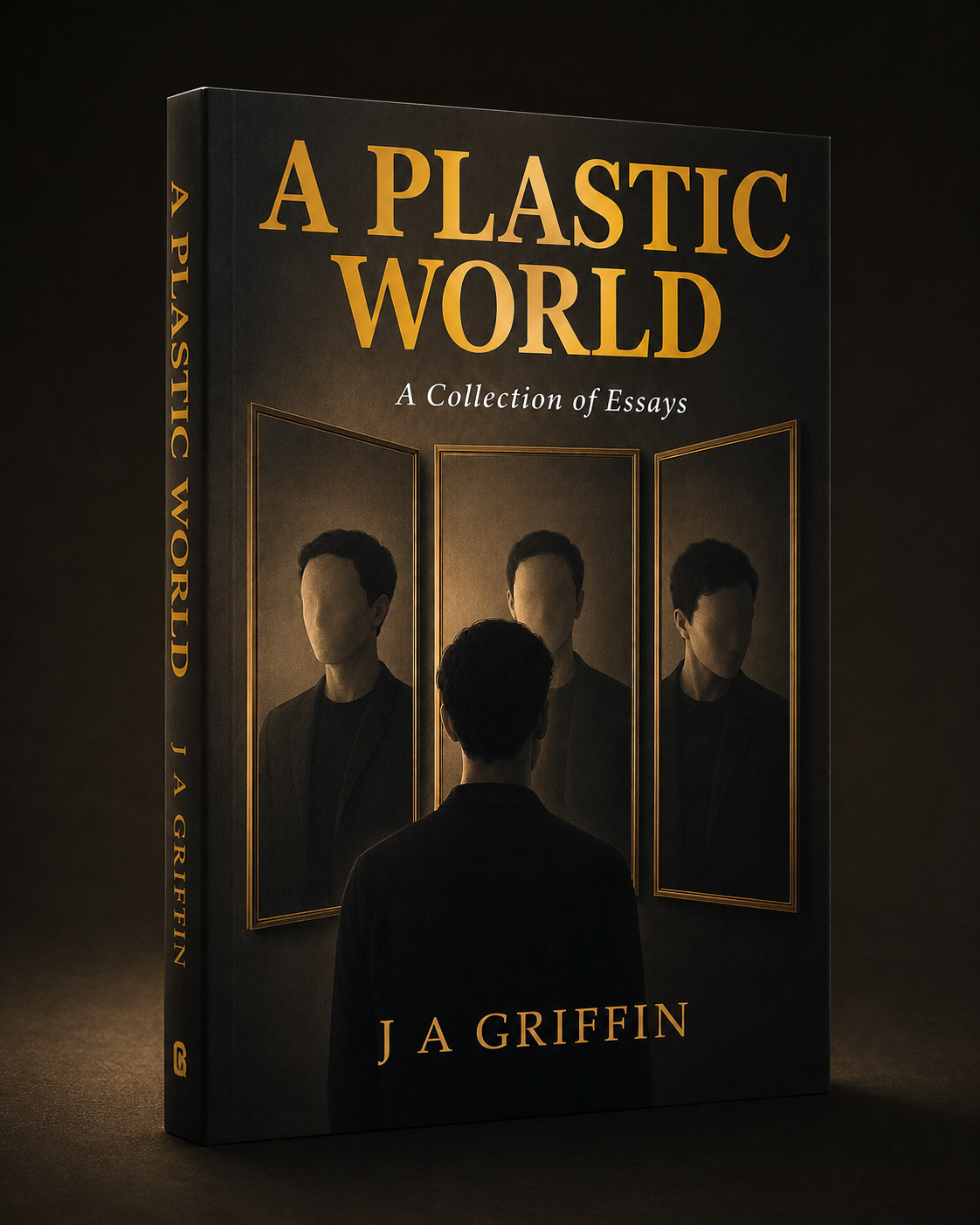
There is no contradiction in the leftist mind. There is only a pattern, repeated across every domain, of harvesting the fruits of Western civilization while poisoning the soil that grew them.— J A Griffin
The Author
J A Griffin has spent nearly forty years living in and returning to Europe — ten years there, thirty going back — watching the West remake itself from inside its cities: Milan, Munich, Hamburg, Paris, London, and hundreds more across Europe, Africa, and the Americas.
He came of age in the 1980s, then spent the 1990s in Europe during the early euphoria of the European Union, skeptical it would hold. He expected citizens would eventually demand their countries and cultures back. Instead he watched the opposite: the same coffee shops in London and Milan, in Cape Town and New York; the same opinions in every newsroom; a flattened culture wearing a local accent.
A Plastic World is the result — a clear-eyed account of how the machinery works, why it cannot correct itself, and what we've inherited that is still worth defending.
J A Griffin has spent nearly forty years living in and returning to Europe — ten years there, thirty going back — watching the West remake itself from inside its cities: Milan, Munich, Hamburg, Paris, London, and hundreds more across Europe, Africa, and the Americas.
He grew up in the 1970s, came of age in the 1980s when America rediscovered its confidence, and spent the 1990s in Europe during the early euphoria of the European Union, skeptical it would hold. He expected citizens would eventually demand their countries and cultures back. Instead he watched the opposite: cities that took a thousand years to become themselves, sanded down to a product you could ship anywhere.
He believes the confidence that revived the West once can revive it again — that a civilization can secure its borders, confront what threatens it, and keep what it built, without apology.
A Plastic World is the result — a clear-eyed account of how the machinery works, why it cannot correct itself, and what we've inherited that is still worth defending.
In Brief
Everything in One File
Covers, bio, the trilogy summary, and links — a single PDF to keep on hand.
Download the One-Sheet (PDF)

